
Food, Recipes and Travel Adventure from the Emerald lsle



- Online Store
- Our Favorite Irish Food Products
- Irish Beverages
- Irish Coffee and Tea
- Irish Jams
- Irish Bread and Scones
- Irish Cheese
- Irish Appetizers
- Irish Deli
- Irish Mustards
- Irish Relishes & Sauces
- Irish Cookies and Cakes
- Irish Candy
- Chocolate Lovers Page
- Butlers Irish Chocolates
- Irish Chocolate
- Irish Food Gifts - Baskets, Boxes & Boards
- Irish Food Recipes
- Irish Entree Recipes
- Irish Broccoli & Cheese Pie
- Tyna's Favorite Pizza Crust
- Tyna's Tangy Tomato & Cheese Pizza
- Baked Ham with Pineapple & Brown Sugar Glaze
- Bacon & Cabbage
- Grilled Bacon (Rashers) Lettuce & Tomato Sandwiches
- Popover Pudding with Irish Bacon
- Grilled Irish Sausages (Bangers)
- Irish Apple Maple Pork Chops
- Spareribs with Mango Chutney Marinade
- Chicken Breasts with Apple-Cherry Chutney
- Herbed Mustard Chicken
- Irish Roast Turkey with Chestnut and Prune Stuffing
- Irish Turkey Pie
- Tyna's Famous Roast Turkey
- Tyna's Sweet Loaf
- Beef and Guinness Pie
- Beef Pot Roast with Beans in Red Wine
- Family Secret Steak Marinade
- Irish Corned Beef Dinner
- Roast Prime Rib with Spinach Porcini Stuffing
- Grilled Salmon
- Seared Salmon with Raison and Caper Butter
- Irish Casserole Recipes
- Irish Side Dish Recipes
- Boxtie
- Tyna's Potato Pancakes
- Homemade French Fries
- Irish Accordian Potatoes
- Tyna's Grilled Potato Halves
- Mashed Potatoes and Parsley Sauce
- Mustard Scalloped Potatoes
- Roasted Mustard Potatoes
- Potato & Leek Bake
- Irish Sweet Potato Bake
- Maple Candied Sweet Potatoes
- Roast Sweet Potatoes
- Glazed Carrots
- Orange Glazed Carrots
- Sauteed Zucchini & Summer Squash
- Tangy Shredded Beets
- Tyna's Homemade Baked Beans
- Irish Dressed Cabbage
- Irish Pub Salad
- Tyna's Cool Carrot Salad
- Tyna's Homemade Coleslaw
- Tyna's Irish Egg & Potato Salad
- Tyna's Macaroni Salad With Crabmeat
- Tyna's Famous Turkey Stuffing
- Irish Appetizer Recipes
- Deviled Eggs
- Sweet & Spicy Snack Mix
- Irish Chedder Triangles
- Irish Cheese Bites with Chutney
- Parsley Cheese Ball
- Autumn Veggie Platter
- Crispy Irish Parsnips
- Irish Leek & Swiss Tarts
- Guinness Batter Onion Rings
- Wild Rice & Barley Stuffed Mushrooms
- Irish Bangers in a Blanket
- Irish Sausage Kebabs
- Irish Shillelagh Sticks
- Salami Rolls
- Irish Chicken Wings with Guinness
- Teriyaki Chicken Wings
- Prawn Bundles with Herb Mayonnaise
- Irish Drink Recipes
- Irish Soup & Stew Recipes
- Autumn Harvest Bisque
- Chunky Irish Potato and Leek Soup
- Potato and Leek Soup
- Fresh Vegetable Soup
- Irish Carrot Soup
- Parmesan Corn Chowder
- Quick Borsch
- Tyna's Summer Beet Soup
- Chunky Bacon and Cabbage Soup
- Dublin Coddle
- Tyna's Chunky Pea Soup with Ham
- Irish Fisherman's Chowder
- Guinness Chicken Stew
- Tyna's Beef Barley Stew
- Tyna's Calico Chili
- Irish Bread & Scone Recipes
- Irish Pie Recipes
- Irish Cookie Recipes
- Celtic Spiral Cookies
- Pinwheels and Checkboards
- Easter Sugar Cookies
- Halloween Sugar Cookies
- Shamrock Sugar Cookies
- Cherry Cordial Cookies
- Chocolate Carmel Cookies
- Chocolate Pots with Crunchy Irish Oatmeal Cookies
- Oat-Nut-Raisin Chippers
- Oatmeal Maple Drop Cookies
- Gingerbread Teddy Bears
- Irish Tea Cakes
- Mint Chocolate Clouds
- Peanut Butter Mice
- Springerle Cookies
- Irish Dessert Bar Recipes
- Irish Candy Recipes
- Chunky Fruit & Nut Fudge
- Irish Cream Coffee Fudge
- Irish Fifteens Bonbons
- Peanut Butter Bonbons
- Maple Caramels
- Chocolate Irish Cream Truffles
- Double Dark Chocolate Truffles
- Molded Candy For Halloween
- Maple Popcorn Balls
- Cinnamon Popcorn Balls
- Mom's Summer Cracker Jack
- Maple Caramel Apples
- Maple Candied Apples
- Irish Cakes and Frosting Recipes
- Irish Wedding Cake
- Traditional Irish Christmas Cake
- Irish Rasberry Vanilla Cake
- Apple & Blackberry Cake with Irish Whiskey Custard
- Porter Cake
- Irish Whiskey Cake
- Irish Vanilla Christmas Sponge Cake
- Irish Carrot-Raisin Cake with Irish Cream Frosting
- Irish Lemon Carrot Cake for Mother's Day
- Tyna's Snow-Capped Lemon Fairy Cakes
- Irish Apple Cake
- Chocolate Irish Cream Truffle Cake
- Irish Cream Chocolate Mousse Cake
- Guinness Stout Chocolate Layer Cake
- Chocolate Mayonnaise Cake
- Bunny Cake
- Tyna's Two Christmas Cakes in One
- No-Bake Layered Ice Cream Cake
- Best Buttercream Frosting
- Mrs. Milman's Dark Choclate Frosting
- Bailey's Irish Cream Cheesecake
- Irish Whiskey Eggnog Cheesecake
- Quick Cherry & Cream Cheese Dessert Cake
- Deluxe Holiday Cheesecake
- Tyna's Lemon Topped Mini Cheesecakes
- Irish Dessert Recipes
- Irish Cream Pudding Parfaits with Oatmeal-Walnut Crunch
- Irish Mince Tartlets
- Irish Applesauce Spice Cake Fancies
- Christmas Bread Pudding
- Mothers' Christmas Plum Pudding
- Pumpkin & Cream Cheese Roll
- Creamy Irish Rice Pudding
- Maple Apple Dessert
- Chocolate Box with Berries & Cream
- Grandmother's Torte
- Tyna's Irish Cream Coffee Torte
- Pavlova
- Guinness and Irish Whiskey Recipes
- Irish Entree Recipes
- Irish Food History
- Boxtie or Boxty?
- History of Bailey's Irish Cream
- History of Corned Beef and Cabbage
- History of Irish Soda Bread
- Irish-Cookery
- Irish Food Newsletter
- 2011 Newsletters
- 2010 Newsletters
- 2009 Newsletters
- 2008 Newsletters
- 2007 Newsletters
- 2006 Newsletters
- Online Store

- Irish Crosses
- Irish Jewelry
- Irish Sweaters
- Irish Shillelaghs
- Irish Handkerchiefs
- Irish Communion Gifts

- Ireland
- Irish Sites to See
- Irish Cities
- Ireland's Rivers
- Flights to Ireland
- Ireland Accommodations
- Irish Castle Accommodations
- Tyna's Ireland Travel Tips
- Bord Failte - Bureau of Ireland Travel
- Ireland Travel Stories
- The Holidays in Ireland 2009
- Summer 2007
- March 2007
- November 2006
- Arriving in Ireland
- The Graveyard Search
- The Thomas Casey Family
- The Bohans of Rynn
- O'Brien's Tavern
- A Night With Old Friends
- Mary Burke, Willia & The Boys
- Arnold Fitzpatrick
- Lough Rynn Castle
- Shopping in Connacht
- The Willett
- Where is John Reynolds?
- The Dance
- Departure: Glebe Street / Arrival: Kiltale House
- Adventures In County Meath
- Visiting With The Lydons
- March 2005
- Summer 1998
- April 1998
- Tell us YOUR Ireland Travel Story

- Irish People
- Irish Traditions
- Irish Celebrations
- St. Valentine's Day in Ireland
- St. Patrick's Day
- Easter In Ireland
- Irish Daffodil Day
- Irish National Famine Memorial Day
- The Irish and All Hallows Eve
- Irish Christmas
- Ireland's Rose of Tralee International Festival
- Celtic Holidays in Ireland
- Ancient Irish Wedding Customs
- Ireland and the Word 'Holiday'
- How to Throw an Irish Party
- Irish Poetry
- Irish Treasures
- Celtic Symbols
- Irish Shamrock
- The Luck of the Irish Clover
- The Irish Book of Kells
- The Shrine pf St. Patrick's Bell
- The Irish Shillelagh
- Ancient Irish Weaponry
- Ancient Irish Relics
- History of the Irish Cross
- Irish History of the Tara Brooch
- History of the Irish Claddagh
- History of the Irish Knit Sweater
- The History of Irish Wade Pottery
- The History of Irish Kilt
- The History of Belleek Irish Porcelain
- The History of the Irish Linen
- The History of the Irish Lace
- Irish Waterford Crystal
- Irish Music
- Irish Organizations
- Native Irish Dog Breeds

- Irish History
- Northern Ireland National Anthems
- The Irish National Anthem
- Irish Immigrants in America
- History of Irish Guinness Stout
- The History of Irish Whiskey
- The Irish English Language
- The Irish Gaels
- Ancient Irish Writing - Ogham
- History of the Irish Flag: The Republic of Ireland
- The Free University of Ireland or Saor-Ollscoil Na hÉireann
- History of Irish Dance
- Irish Saints
- The Irish in Australia
- The Titanic and Ireland
- Custom of the Irish Matchmaker
- History of the Irish Defence Forces
- Irish Legends and Myths
- The Legend of The Irish Banshee
- The High Kings of Ireland
- Celtic Queen Medb of Connaught
- The Myth About Irish Knit Sweaters
- The Irish Legend of Deirdre of the Sorrows
- Ghost watch in Ireland: The Helena Blunden Story
- The Irish Legend of the Fairy Race
- The Fairies' Revenge
- The Irish Phouka
- The Irish Legend of Finn MacCoul
- Finn MacCoul and The Salmon of Knowledge
- Finn MacCoul and The Isle of Man
- Finn MacCoul and The Giants Causeway
- How Finn MacCoul and His Men Were Bewitched
- Research Irish Heritage
- Irish History


Irish Food History


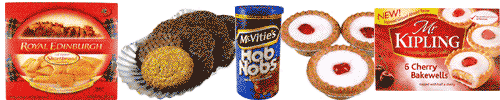
Irish Cookies & Cakes
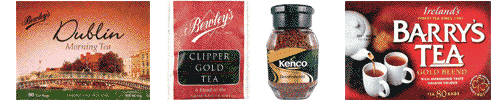
Irish Coffee & Tea

Become a fan of LittleShamrocks.com
Disclaimer: LittleShamrocks.com is an affiliate website that receives commissions from sales of the products listed. We have purchased and sampled many, but not all, of the products on these pages.

© Copyright LittleShamrocks.com. All Rights Reserved.