
Food, Recipes and Travel Adventure from the Emerald lsle



- Online Store
- Our Favorite Irish Food Products
- Irish Beverages
- Irish Coffee and Tea
- Irish Jams
- Irish Bread and Scones
- Irish Cheese
- Irish Appetizers
- Irish Deli
- Irish Mustards
- Irish Relishes & Sauces
- Irish Cookies and Cakes
- Irish Candy
- Chocolate Lovers Page
- Butlers Irish Chocolates
- Irish Chocolate
- Irish Food Gifts - Baskets, Boxes & Boards
- Irish Food Recipes
- Irish Entree Recipes
- Irish Broccoli & Cheese Pie
- Tyna's Favorite Pizza Crust
- Tyna's Tangy Tomato & Cheese Pizza
- Baked Ham with Pineapple & Brown Sugar Glaze
- Bacon & Cabbage
- Grilled Bacon (Rashers) Lettuce & Tomato Sandwiches
- Popover Pudding with Irish Bacon
- Grilled Irish Sausages (Bangers)
- Irish Apple Maple Pork Chops
- Spareribs with Mango Chutney Marinade
- Chicken Breasts with Apple-Cherry Chutney
- Herbed Mustard Chicken
- Irish Roast Turkey with Chestnut and Prune Stuffing
- Irish Turkey Pie
- Tyna's Famous Roast Turkey
- Tyna's Sweet Loaf
- Beef and Guinness Pie
- Beef Pot Roast with Beans in Red Wine
- Family Secret Steak Marinade
- Irish Corned Beef Dinner
- Roast Prime Rib with Spinach Porcini Stuffing
- Grilled Salmon
- Seared Salmon with Raison and Caper Butter
- Irish Casserole Recipes
- Irish Side Dish Recipes
- Boxtie
- Tyna's Potato Pancakes
- Homemade French Fries
- Irish Accordian Potatoes
- Tyna's Grilled Potato Halves
- Mashed Potatoes and Parsley Sauce
- Mustard Scalloped Potatoes
- Roasted Mustard Potatoes
- Potato & Leek Bake
- Irish Sweet Potato Bake
- Maple Candied Sweet Potatoes
- Roast Sweet Potatoes
- Glazed Carrots
- Orange Glazed Carrots
- Sauteed Zucchini & Summer Squash
- Tangy Shredded Beets
- Tyna's Homemade Baked Beans
- Irish Dressed Cabbage
- Irish Pub Salad
- Tyna's Cool Carrot Salad
- Tyna's Homemade Coleslaw
- Tyna's Irish Egg & Potato Salad
- Tyna's Macaroni Salad With Crabmeat
- Tyna's Famous Turkey Stuffing
- Irish Appetizer Recipes
- Deviled Eggs
- Sweet & Spicy Snack Mix
- Irish Chedder Triangles
- Irish Cheese Bites with Chutney
- Parsley Cheese Ball
- Autumn Veggie Platter
- Crispy Irish Parsnips
- Irish Leek & Swiss Tarts
- Guinness Batter Onion Rings
- Wild Rice & Barley Stuffed Mushrooms
- Irish Bangers in a Blanket
- Irish Sausage Kebabs
- Irish Shillelagh Sticks
- Salami Rolls
- Irish Chicken Wings with Guinness
- Teriyaki Chicken Wings
- Prawn Bundles with Herb Mayonnaise
- Irish Drink Recipes
- Irish Soup & Stew Recipes
- Autumn Harvest Bisque
- Chunky Irish Potato and Leek Soup
- Potato and Leek Soup
- Fresh Vegetable Soup
- Irish Carrot Soup
- Parmesan Corn Chowder
- Quick Borsch
- Tyna's Summer Beet Soup
- Chunky Bacon and Cabbage Soup
- Dublin Coddle
- Tyna's Chunky Pea Soup with Ham
- Irish Fisherman's Chowder
- Guinness Chicken Stew
- Tyna's Beef Barley Stew
- Tyna's Calico Chili
- Irish Bread & Scone Recipes
- Irish Pie Recipes
- Irish Cookie and Bar Recipes
- Celtic Spiral Cookies
- Pinwheels and Checkboards
- Easter Sugar Cookies
- Halloween Sugar Cookies
- Shamrock Sugar Cookies
- Cherry Cordial Cookies
- Chocolate Carmel Cookies
- Chocolate Pots with Crunchy Irish Oatmeal Cookies
- Oat-Nut-Raisin Chippers
- Oatmeal Maple Drop Cookies
- Gingerbread Teddy Bears
- Irish Tea Cakes
- Mint Chocolate Clouds
- Peanut Butter Mice
- Springerle Cookies
- Irish Flag Bars
- Fruit & Oat Bars
- Irish Chocolate Mint Squares
- Irish Cream Brownies
- Chocolate Walnut Brownies
- Irish Candy Recipes
- Chunky Fruit & Nut Fudge
- Irish Cream Coffee Fudge
- Irish Fifteens Bonbons
- Peanut Butter Bonbons
- Maple Caramels
- Chocolate Irish Cream Truffles
- Double Dark Chocolate Truffles
- Molded Candy For Halloween
- Maple Popcorn Balls
- Cinnamon Popcorn Balls
- Mom's Summer Cracker Jack
- Maple Caramel Apples
- Maple Candied Apples
- Irish Cakes and Frosting Recipes
- Irish Wedding Cake
- Traditional Irish Christmas Cake
- Irish Rasberry Vanilla Cake
- Apple & Blackberry Cake with Irish Whiskey Custard
- Porter Cake
- Irish Whiskey Cake
- Irish Vanilla Christmas Sponge Cake
- Irish Carrot-Raisin Cake with Irish Cream Frosting
- Irish Lemon Carrot Cake for Mother's Day
- Tyna's Snow-Capped Lemon Fairy Cakes
- Irish Apple Cake
- Chocolate Irish Cream Truffle Cake
- Irish Cream Chocolate Mousse Cake
- Guinness Stout Chocolate Layer Cake
- Chocolate Mayonnaise Cake
- Bunny Cake
- Tyna's Two Christmas Cakes in One
- No-Bake Layered Ice Cream Cake
- Best Buttercream Frosting
- Mrs. Milman's Dark Choclate Frosting
- Bailey's Irish Cream Cheesecake
- Irish Whiskey Eggnog Cheesecake
- Quick Cherry & Cream Cheese Dessert Cake
- Deluxe Holiday Cheesecake
- Tyna's Lemon Topped Mini Cheesecakes
- Irish Dessert Recipes
- Irish Cream Pudding Parfaits with Oatmeal-Walnut Crunch
- Irish Mince Tartlets
- Irish Applesauce Spice Cake Fancies
- Christmas Bread Pudding
- Mothers' Christmas Plum Pudding
- Pumpkin & Cream Cheese Roll
- Creamy Irish Rice Pudding
- Maple Apple Dessert
- Chocolate Box with Berries & Cream
- Grandmother's Torte
- Tyna's Irish Cream Coffee Torte
- Pavlova
- Guinness and Irish Whiskey Recipes
- Irish Entree Recipes
- Irish Food History
- Boxtie or Boxty?
- History of Bailey's Irish Cream
- History of Corned Beef and Cabbage
- History of Irish Soda Bread
- Irish-Cookery
- Irish Food Newsletter
- 2011 Newsletters
- 2010 Newsletters
- 2009 Newsletters
- 2008 Newsletters
- 2007 Newsletters
- 2006 Newsletters
- Online Store


- Ireland
- Irish Sites to See
- Irish Cities
- Ireland's Rivers
- Flights to Ireland
- Ireland Accommodations
- Irish Castle Accommodations
- Tyna's Ireland Travel Tips
- Bord Failte - Bureau of Ireland Travel
- Ireland Travel Stories
- The Holidays in Ireland 2009
- Summer 2007
- March 2007
- November 2006
- Arriving in Ireland
- The Graveyard Search
- The Thomas Casey Family
- The Bohans of Rynn
- O'Brien's Tavern
- A Night With Old Friends
- Mary Burke, Willia & The Boys
- Arnold Fitzpatrick
- Lough Rynn Castle
- Shopping in Connacht
- The Willett
- Where is John Reynolds?
- The Dance
- Departure: Glebe Street / Arrival: Kiltale House
- Adventures In County Meath
- Visiting With The Lydons
- March 2005
- Summer 1998
- April 1998
- Tell us YOUR Ireland Travel Story

- Irish Traditions
- Irish Celebrations
- St. Valentine's Day in Ireland
- St. Patrick's Day
- Irish Easter Traditions
- Irish Daffodil Day
- Irish National Famine Memorial Day
- The Irish and All Hallows Eve
- Irish Christmas
- Ireland's Rose of Tralee International Festival
- Celtic Holidays in Ireland
- Ancient Irish Wedding Customs
- Ireland and the Word 'Holiday'
- How to Throw an Irish Party
- Irish Poetry
- Irish Treasures
- The Irish Book of Kells
- The Shrine pf St. Patrick's Bell
- The Irish Shillelagh
- Ancient Irish Weaponry
- Ancient Irish Relics
- History of the Irish Cross
- Irish History of the Tara Brooch
- History of the Irish Claddagh
- History of the Irish Knit Sweater
- The History of Irish Wade Pottery
- The History of Irish Kilt
- The History of Belleek Irish Porcelain
- The History of the Irish Linen
- The History of the Irish Lace
- Irish Waterford Crystal
- Irish Music
- Irish Organizations
- Native Irish Dog Breeds

- Irish History
- Northern Ireland National Anthems
- The Irish National Anthem
- Irish Immigrants in America
- History of Irish Guinness Stout
- The History of Irish Whiskey
- The Irish English Language
- The Irish Gaels
- Ancient Irish Writing - Ogham
- History of the Irish Flag: The Republic of Ireland
- The Free University of Ireland or Saor-Ollscoil Na hÉireann
- History of Irish Dance
- Irish Saints
- The Irish in Australia
- The Titanic and Ireland
- Custom of the Irish Matchmaker
- History of the Irish Defence Forces
- Irish Legends and Myths
- The Legend of The Irish Banshee
- The High Kings of Ireland
- Celtic Queen Medb of Connaught
- The Myth About Irish Knit Sweaters
- The Irish Legend of Deirdre of the Sorrows
- Ghost watch in Ireland: The Helena Blunden Story
- The Irish Legend of the Fairy Race
- The Fairies' Revenge
- The Irish Phouka
- The Irish Legend of Finn MacCoul
- Finn MacCoul and The Salmon of Knowledge
- Finn MacCoul and The Isle of Man
- Finn MacCoul and The Giants Causeway
- How Finn MacCoul and His Men Were Bewitched
- Research Irish Heritage
- Irish History


Native Irish Dog Breeds
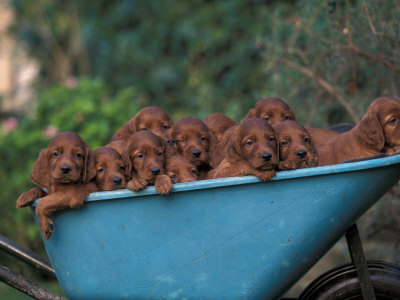 |
A Wheelbarrow Full of Irish / Red Setter Puppies
Photographic Print Buy at AllPosters.com |
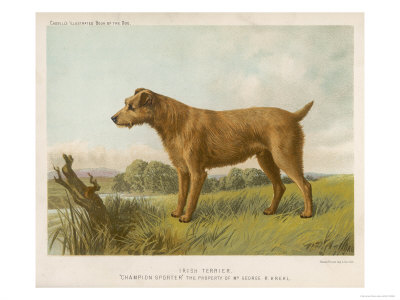
Irish Terrier
An Irish Terrier Giclee Print
Buy at AllPosters.com
Ireland has produced four terrier breeds, all of which are markedly different from terriers on the continent and in England. The dog now officially called Irish Terrier is possibly the oldest of the Irish terrier breeds, however, it would be difficult to prove this conclusively. Before the 1880's, the color of the Irish Terrier had not been settled, sometimes with red, sometimes black and tan, and sometimes brindle. At the end of the 19th century, efforts were made to breed out the black and tan and the brindles. By the 20th century all Irish Terriers showed the red coat, and it soon made its appearance at dog shows in England and in the United States, where it was enthusiastically received. During World War I, they were used as messenger dogs in the noise and confusion of trench warfare, which proved their intelligence and fearlessness. The first breed club was set up in Dublin in 1879 and the Irish Terrier was the first member of the terrier group to be recognized by the English Kennel Club as a native Irish breed.
 |
Irish Glen of Imaal
Head Portrait of
Irish Glen of Imaal Terrier Dog Photographic Print
Buy at AllPosters.com
Many dogs in the terrier group were not really appreciated by gentlemen sportsmen before the 1850's. The Irish Glen of Imaal is an old breed that was ignored for a long time before results of later breeding experiments brought attention to him. He is a local dog, confined to the bleak area of the Glen of Imaal. The farmers of this area used their natural cunning and dexterity to survive in the harsh terrain. The Irish Glen had evolved through generations of hard work into the strong sturdy dog we know today. The Irish Kennel Club officially recognized the breed in 1934 and a club to promote its interest was formed.
 |
Irish Soft Coated Wheaten Terrier
The Irish Soft Coated Wheaten Terrier is probably the oldest of the four breeds. It's existence is noted from 200 year old text references to "soft-coated" dogs. The relationship of the modern Irish Terrier to the Wheaten appears to be the result of deliberate breeding experiments, probably resulting in a fairly mixed ancestry. Despite the long history of the Soft Coated Wheaten Terrier, it was not officially recognized by the Irish Kennel Club until 1937. The popularity of the breed has grown steadily and is now internationally known.
Kerry Blue
Like the other Irish Terrier breeds, the Kerry Blue has been in the country for centuries. Because of its humble origins as a rat catcher and farm dog, there are few references to the breed before the 20th century. The first literary references to the Kerry Blue dates from 1847, in which the author describes 'a bluish slate-colored dog, marked with darker blotches and patches, and often with tan about the legs and muzzle'. This blackish-blue Irish terrier was prevalent in Kerry but it has been developed in other counties as well. The blue made its first appearance on the show circuit in 1913, and the Dublin Blue Terrier Club was formed in 1920. The Kerry Blue quickly became popular as a sort of mascot for Irish patriots. With its reputation as an excellent working and companion dog, it was considered to be nearly perfect.
Kerry Beagle
The Kerry Beagle is one of the most ancient breeds of Irish dog. Next to the Irish Wolfhound, the Kerry Beagle may actually be the oldest native Irish breed. It is thought that the dog referred to as 'GADHAR' in old Irish texts may be the direct ancestor of the modern day Kerry hound. The most likely outline of the history of this breed is a Celtic hound going back to the time of the first Celtic settlements in Ireland. In the middle ages and later centuries, the breed was mixed through experiments with hounds from the continent to produce an efficient hunting dog. They unfortunately suffered during the great hunger in Ireland in 1847 and were decimated by starvation. The name 'beagle' is derived from the Irish word 'beag' (meaning small) and the Beagle is a small hound used to hunt small game. Larger hounds like the Kerry Beagle were often used to hunt stag. The present day word for the Beagle in Irish is 'Pocadan' which refers to its use as a hunting dog rather than by it's size
Water Spaniels
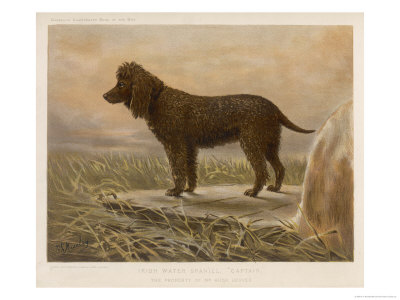
An Irish Water Spaniel in the Field Giclee Print
Buy at AllPosters.com
The exact origins of this breed remain obscure. It is thought that Water Spaniels evolved from dogs that originated in Persia and came to Ireland via Spain. The first Irish reference to 'water dogs that pursue water fowl' dates from 1600. There is no real evidence of the ancestry of the Irish Water Spaniel except in its most peculiar feature, the rat tail. This feature appears in no similar dog and makes it very likely that the modern breed had an indigenous Irish ancestor. The descendants of these dogs were accepted and achieved great success at shows in the second half of the 19th century. The Irish Water Spaniel Club was formed in 1890.
 |
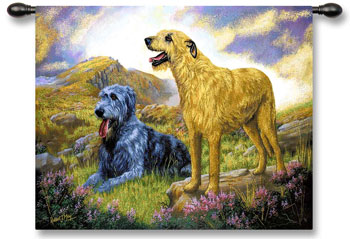
Irish Wolfhounds
The Irish Celts were interested in breeding large hounds, and these large Irish hounds could have had smooth or rough coats. In later times, the rough coat became predominate possibly due to the Irish climate. The first written account of these dogs was in a Roman document from 391 A.D. but they were already established in Ireland in the Uisneach (first century) A.D. Sétanta changed his name to Cu-Chulainn (the Hound of Culann). Irish hounds probably formed the basis of the Scottish Deerhound. Pairs of Irish hounds were prized as gifts by the royal houses on the European continent from the Middle Ages to the 17th century. In the 15th century, each county in Ireland was required to keep twenty-four wolfhounds to protect the flocks of sheep from the wolves. The gradual disappearance of the wolf, and continued demand abroad, reduced their numbers almost to the point of extinction by the end of the 17th century. In the late 19th century, there was renewed interest in the breed and the Irish Wolfhound became a living symbol of Irish culture and of the Celtic past. At this time, Capt. G. A. Graham obtained a few of the remaining wolfhounds in Ireland, and he eventually achieved a type of dog that bred true in every generation. The results were ultimately accepted as a legitimate revival of the breed. The Irish Kennel Club recognized a class for Irish Wolfhounds at their show in 1879 and a club was formed in 1885.
 |
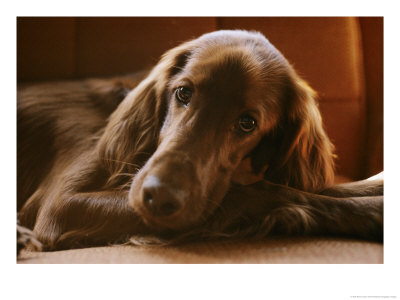
Red and White Irish Setter
The Irish Setter came into its own at the end of the 17th century. A fact not well known outside of Ireland is that there are two breeds of Irish Setters, however, it is certain that the Red and White Setter is the older of the two. Selective breeding evolved into the solid red color, which resulted in much confusion about their proper color. By the end of the 19th century, the Red Setter had become more predominate than the Red and White. The Red & White Setters became so rare that they were thought to be extinct. In the 1920's, efforts were made to revive the breed and, by 1944, it had re-established itself well enough to have a club of its own. The Irish Red & White Setter Field & Show Society was formed in 1981 and, through its endeavors and direction, the breed is now well established internationally.
Red Irish Setter
The Irish Red Setter was developed in Ireland as a working dog for hunting. The breed is derived from the Irish Red and White Setter and an unknown solid red colored dog. It was a clearly identified as its own breed in the 18th century. The Irish Red Setter Club was established in 1882 and the breed has evolved down through the years into a hardy, healthy, intelligent dog, possessed of excellent working ability and great stamina.
For more detailed information and specifications of these native Irish dog breeds, have a look at the web site of the Irish Kennel Club.
 |

Irish Coffee & Tea
Irish Chocolate


Become a fan of LittleShamrocks.com
on FaceBook

An Lar Community Television Ireland

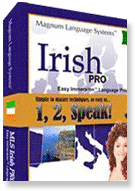
Irish Immersion Pro
A Simple Way to Master the Irish Language
Slash Your Energy Bill
Wind & Solar Power
How-to Guides

Wind & Solar Power
How-to Guides
WATERFORD
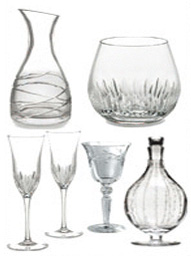

Terry's Favorite
Ireland Book!
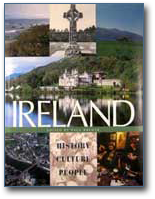
Ireland: History,
Culture, People
Ireland Book!
Ireland: History,
Culture, People

Buy Maple Syrup
& Maple Candy
Disclaimer: LittleShamrocks.com is an affiliate website that receives commissions from sales of the products listed. We have purchased and sampled many, but not all, of the products on these pages.

© Copyright LittleShamrocks.com. All Rights Reserved.